Drill pipes
Drill pipes in various diameters and thread types for water-well and geological drilling.
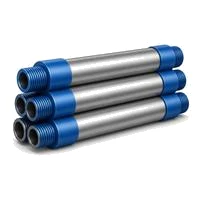
Drill pipes carry rotation and load from the rig to the bit and serve as the channel for drilling fluid. The string runs the full length of the hole, so its reliability decides how safe the job is: a thread failure or washout means a stuck string and long downtime.
Types of pipe
- Mud rotary drill pipe — drilling fluid is pumped down it. The most common type in water-well and geological drilling.
- Down-the-hole hammer pipe — carries compressed air to the hammer. It is heavy-walled to withstand both pressure and vibration.
- Drill collars — heavy pipe set above the bit to put weight on it and help keep the hole straight.
- Wireline core rods — with a smooth bore so the inner tube can be retrieved through them. They are listed by size under “Geological equipment”.
Sizes
Water-well and geological drilling mostly uses pipe of 50–127 mm outside diameter. Lengths are usually 1.5 m, 3 m, 4.5 m and 6 m, chosen to suit the rig's mast height. Threads come in international standard sizes (API) or in the rig maker's own standard.
How to choose
- Rig compatibility. The thread type, the connection to the chuck or rotary head and the pipe length must suit the rig.
- Depth. The string's own weight and torque rise with depth, which calls for heavier-walled pipe in stronger steel.
- Drilling method. Air drilling needs sealed threads and thick walls; mud drilling needs enough bore for the fluid to flow freely.
- Material. Heat-treated alloy steel and hardened tool joints greatly extend service life.
Care
- Apply thread compound to every connection.
- Make up joints to the rated torque: over-tightening damages the thread, under-tightening leads to washouts.
- Fit thread protectors for transport and storage.
- Store pipe straight, on supports. Never run a bent pipe.
- Inspect threads for wear and cracks regularly.
When you get in touch, give us your rig make and model, the pipe diameter, length and thread type, and your target depth. A photo or measurements of your existing pipe also help us match it.